
How Much Does Custom Software Development Cost in 2026?
Custom software development helps businesses build software around their own requirements instead of changing their processes to fit a ready-made product. It can be used for CRM systems, ERP platforms, SaaS products, e-commerce platforms, healthcare systems, marketplaces, and internal business tools.
But one important question comes before development begins: How much does custom software development cost in 2026?
There is no single fixed price. The final cost depends on the features, complexity, technology, integrations, security, development team, timeline, and maintenance requirements.
A simple business application may cost a few lakh rupees, while a large SaaS, ERP, or enterprise platform can require ₹50 lakh, ₹1 crore, or more.
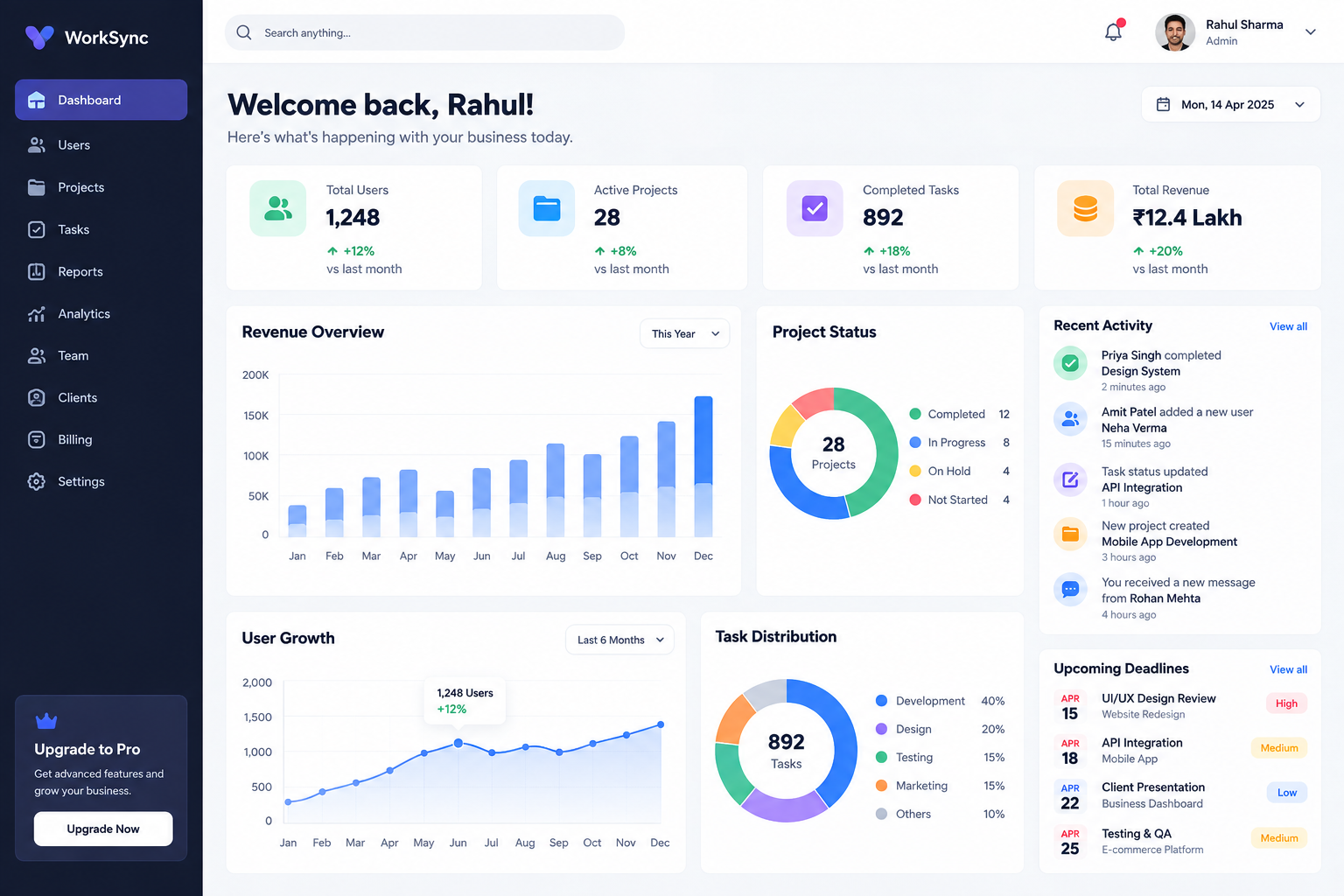
Custom Software Development Cost in 2026
The cost can be easier to understand when software is divided into different complexity levels.
<table>
  <thead>
    <tr>
      <th>Software Type</th>
      <th>Approximate Cost in India</th>
      <th>Typical Timeline</th>
    </tr>
  </thead>
  <tbody>
    <tr>
      <td>Basic Internal Tool</td>
      <td>₹1.5–4 Lakh</td>
      <td>6–10 Weeks</td>
    </tr>
    <tr>
      <td>Small Business Application</td>
      <td>₹4–12 Lakh</td>
      <td>2–4 Months</td>
    </tr>
    <tr>
      <td>CRM / Business System</td>
      <td>₹8–25 Lakh</td>
      <td>3–6 Months</td>
    </tr>
    <tr>
      <td>SaaS MVP</td>
      <td>₹5–20 Lakh</td>
      <td>2–4 Months</td>
    </tr>
    <tr>
      <td>Marketplace Platform</td>
      <td>₹12–40 Lakh+</td>
      <td>4–8 Months</td>
    </tr>
    <tr>
      <td>Custom ERP / Advanced SaaS</td>
      <td>₹12–40 Lakh+</td>
      <td>5–10+ Months</td>
    </tr>
    <tr>
      <td>Enterprise Software</td>
      <td>₹50 Lakh–₹1 Crore+</td>
      <td>9–18+ Months</td>
    </tr>
  </tbody>
</table>
These are general planning estimates, not fixed quotations. Two applications with similar names can have very different costs because their features, users, integrations, and security requirements may be completely different.
What Affects the Cost of Custom Software?
Several factors influence the final custom software development cost.
Software Complexity
Complexity is one of the biggest cost factors. A simple application with login, forms, and a dashboard requires less development than software containing multiple business modules and advanced workflows.
For example, an employee attendance system may have a limited number of workflows. An ERP platform may need finance, inventory, HR, purchasing, sales, and reporting modules.
More workflows mean more development, testing, and maintenance.
Features and Functionality
The features included in the software directly affect development effort.
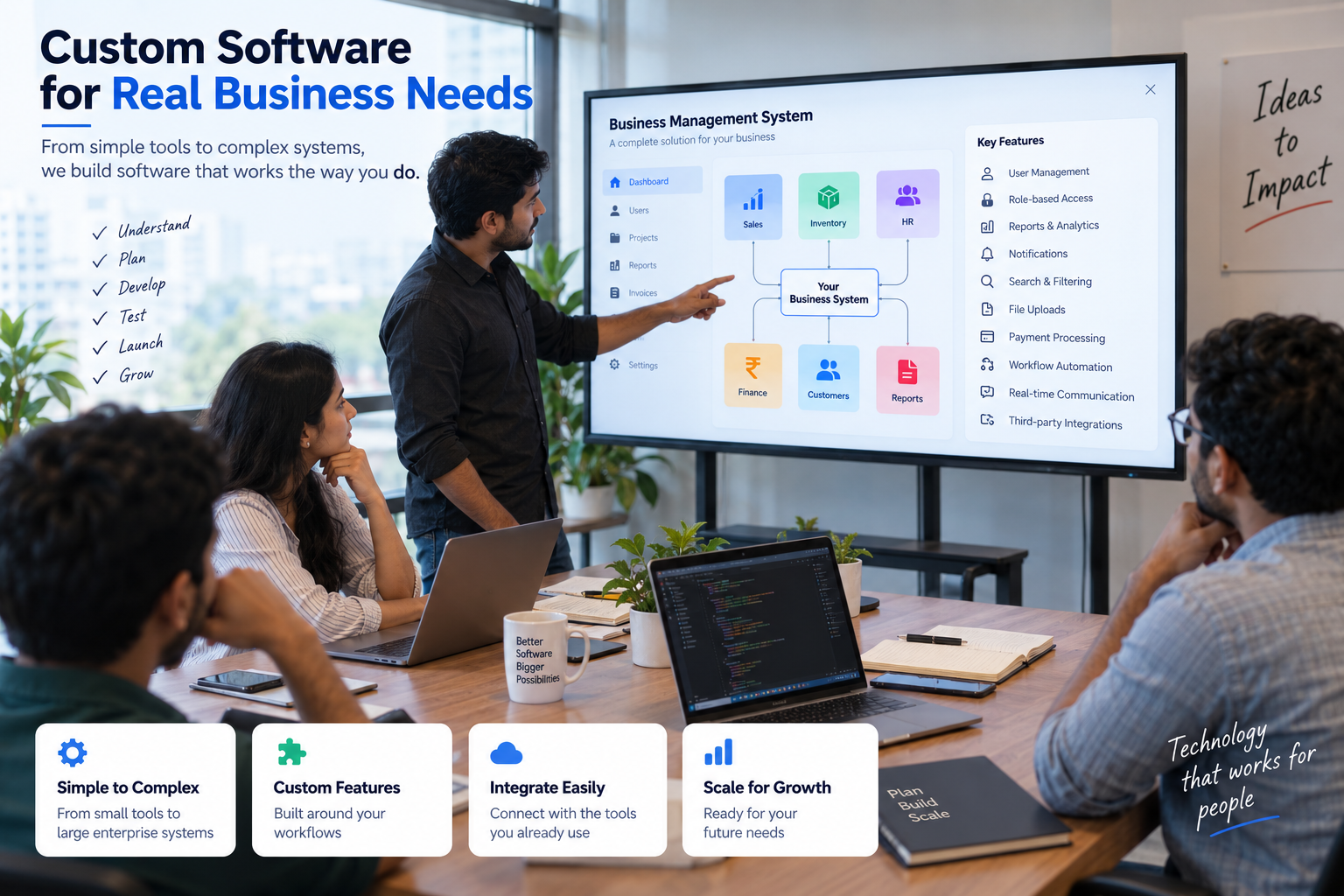
Common features include:
User registration and login
Role-based access
Admin dashboards
Reports and analytics
Notifications
Search and filtering
File uploads
Payment processing
Workflow automation
Real-time communication
Advanced functionality requires additional planning, development, and testing.
Third-Party Integrations
Many businesses need custom software to connect with other platforms.
Examples include:
Payment gateways
Email services
SMS platforms
Accounting software
CRM systems
Maps
Cloud services
AI APIs
ERP systems
An integration is not simply a connection button. Developers need to handle APIs, authentication, errors, data synchronization, testing, and security.
Custom Software Development Cost in India
The custom software development cost in India depends on the development partner, project requirements, technology, and complexity.
Businesses may work with freelancers, small development teams, software agencies, or larger development companies.
Development OptionSuitable ForFreelancerSmall and focused projectsSmall Development TeamSmall to medium applicationsSoftware AgencyBusiness applications and SaaSDedicated TeamLong-term product developmentEnterprise Development CompanyLarge and complex systems
The cheapest quotation is not always the lowest overall cost. A proposal with better architecture, testing, security, documentation, and support may provide more value over the lifetime of the software.
Cost Based on Software Type
The type of software also affects the budget.
CRM Software
A custom CRM may include customer management, lead tracking, sales pipelines, follow-ups, reports, notifications, and analytics.
A basic CRM can have a smaller scope, while an advanced CRM with automation and multiple integrations can require significantly more development.
ERP Software
ERP software connects several business functions in one system.
It may include:
Finance
Inventory
Human resources
Procurement
Sales
Customer management
Reporting
Because several departments use the same system, ERP development usually requires careful planning and complex business logic.
SaaS Software
A SaaS application allows customers to access software through the internet.
It may require:
User accounts
Subscription plans
Online payments
Billing
Multi-tenancy
Dashboards
APIs
Analytics
Cloud infrastructure
A SaaS product also needs an architecture that can support multiple customers securely.
E-commerce Software
Custom e-commerce software may include product management, shopping carts, checkout, payments, inventory, orders, customer accounts, coupons, and delivery integrations.
The cost increases when the business requires customized purchasing workflows or integrations with external systems.
[Image Suggestion: E-commerce software interface showing products, orders, inventory, and payment workflow.]
MVP vs Full Custom Software
Startups do not always need to build every planned feature in the first version.
An MVP, or Minimum Viable Product, focuses on the core functionality needed to launch and test an idea.
For example, an initial SaaS product may include:
User registration
Login
Main dashboard
Core business workflow
Basic administration
Advanced analytics, automation, integrations, and additional modules can be added later.
An MVP can reduce the initial investment because the development scope is smaller. However, security, testing, reliability, and a suitable technical foundation should still be included.
How Long Does Custom Software Development Take?
The timeline depends on the number of features, development complexity, integrations, team size, and testing requirements.
<table>
  <thead>
    <tr>
      <th>Project Complexity</th>
      <th>Approximate Development Time</th>
    </tr>
  </thead>
  <tbody>
    <tr>
      <td>Basic</td>
      <td>6–10 Weeks</td>
    </tr>
    <tr>
      <td>Small Business</td>
      <td>2–4 Months</td>
    </tr>
    <tr>
      <td>Medium</td>
      <td>3–6 Months</td>
    </tr>
    <tr>
      <td>Complex SaaS</td>
      <td>5–9+ Months</td>
    </tr>
    <tr>
      <td>Enterprise</td>
      <td>9–18+ Months</td>
    </tr>
  </tbody>
</table>
Changing requirements can increase the timeline. Testing and approval cycles can also affect the launch date.
Adding more developers does not always make a project finish proportionally faster because different development tasks may depend on each other.
Additional Costs After Development
The initial development cost is only part of the total software investment.
Businesses may also need to budget for:
ExpensePurposeCloud HostingRunning the applicationDatabaseStoring application dataAPIsConnecting external servicesMonitoringTracking performance and errorsBackupsProtecting business dataSecurityProtecting users and systemsMaintenanceFixing bugs and updating softwareSupportHandling technical issues
Some costs are monthly or usage-based, while others occur when new features or major updates are required.
How to Reduce Software Development Costs
Reducing the budget does not always mean choosing the cheapest development team.
Businesses can control costs by:
Clearly defining requirements
Prioritizing essential features
Building an MVP when appropriate
Planning integrations early
Using suitable technologies
Reusing proven components
Testing during development
Controlling unnecessary scope changes
A clear project scope reduces rework and makes it easier to estimate the development budget.
How to Estimate Your Software Budget
A simple starting formula is:
Development Cost = Estimated Development Hours × Hourly Rate
For example, if a project requires 1,000 development hours at ₹1,500 per hour:
1,000 × ₹1,500 = ₹15,00,000
However, the complete project budget may also include UI/UX design, testing, project management, deployment, cloud infrastructure, third-party services, and maintenance.
This gives businesses a more realistic view of the investment required.
Final Thoughts
The custom software development cost in 2026 can range from a few lakh rupees for simple applications to ₹50 lakh, ₹1 crore, or more for complex enterprise software.
The final price depends on what the software needs to do, how many users it will support, which systems it must connect with, and how much security and scalability it requires.
Before requesting a quotation, define your business goals, users, workflows, features, integrations, security requirements, and expected scale. A clear scope helps development companies create more accurate estimates and helps businesses avoid unexpected costs.