Legacy software modernization is becoming a priority for businesses that want to improve performance, strengthen security, reduce technical debt, and prepare for AI adoption. Many organizations still rely on outdated applications that are expensive to maintain and difficult to integrate with modern technologies.
AI-powered legacy software modernization uses artificial intelligence to assist with code analysis, documentation, testing, refactoring, and migration. Instead of manually rewriting every component, businesses can use AI-assisted tools to accelerate selected development tasks while retaining human oversight.
So, how much does it cost to modernize legacy software with AI in 2026?
There is no universal price. A focused modernization project may cost tens of thousands of dollars, while enterprise-wide transformations can reach millions. A September 2026 industry estimate places focused modernization work around $25,000–$100,000 or more, with broader programs costing substantially more.
This guide explains the main cost drivers, project estimates, modernization strategies, and practical ways to plan a realistic budget.
What Is AI-Powered Legacy Software Modernization?
AI-powered legacy software modernization is the process of upgrading outdated applications with the help of AI tools and modern software engineering practices.
It can involve:
Analyzing legacy code and generating technical documentation.
Refactoring outdated programming languages and frameworks.
Migrating databases and improving data architecture.
Moving applications to cloud infrastructure.
Automating software testing and code reviews.
Replacing tightly coupled components with modular services.
Integrating AI-powered features into existing applications.
The objective is to make software easier to maintain, more secure, scalable, and compatible with modern business requirements.
How Much Does Legacy Software Modernization Cost in 2026?
The following ranges are illustrative planning estimates, not fixed industry prices. Actual costs depend on application complexity, migration scope, integrations, security requirements, and the modernization approach.
Estimated Cost of Legacy Software Modernization in 2026
Focused code analysis and documentation: $10,000–$30,000.
Partial application modernization: $25,000–$100,000.
Single application transformation: $100,000–$500,000.
Mid-market modernization program: $500,000–$2 million.
Large enterprise modernization: $2 million–$10 million or more.
These broad planning bands are consistent with the substantial variation described in 2026 modernization cost guidance.
A detailed estimate should separate discovery, development, migration, testing, deployment, and ongoing operating expenses.
Key Factors That Affect AI Modernization Costs
1. Complexity of the Existing Application
Older applications often contain undocumented business rules, outdated dependencies, and tightly connected components. The more complex the system, the more effort is required to understand, modify, and validate it.
Applications with multiple databases, third-party integrations, and strict uptime requirements generally need more extensive planning and testing.
2. Modernization Strategy
The selected strategy has a major influence on the budget.
Strategy
Description
Rehosting
Moving the application to new infrastructure with minimal code changes
Refactoring
Improving existing code while retaining its core architecture
Replatforming
Moving to a newer platform with limited redesign
Rearchitecting
Redesigning the application to support a modern architecture
Rebuilding
Developing a replacement application
Microsoft's modernization guidance includes these approaches as part of its application planning framework.
3. AI Tools and Infrastructure
AI coding assistants, automated testing platforms, cloud services, and migration tools can add licensing, usage, and infrastructure expenses.
AI may reduce manual effort in specific tasks, but businesses still need experienced developers, security reviews, and quality assurance.
4. Data Migration and Integration
Migrating databases, preserving business logic, and connecting modern applications to existing systems can require significant engineering work.
Data validation and rollback planning are particularly important for business-critical applications.
How AI Helps Reduce Modernization Effort
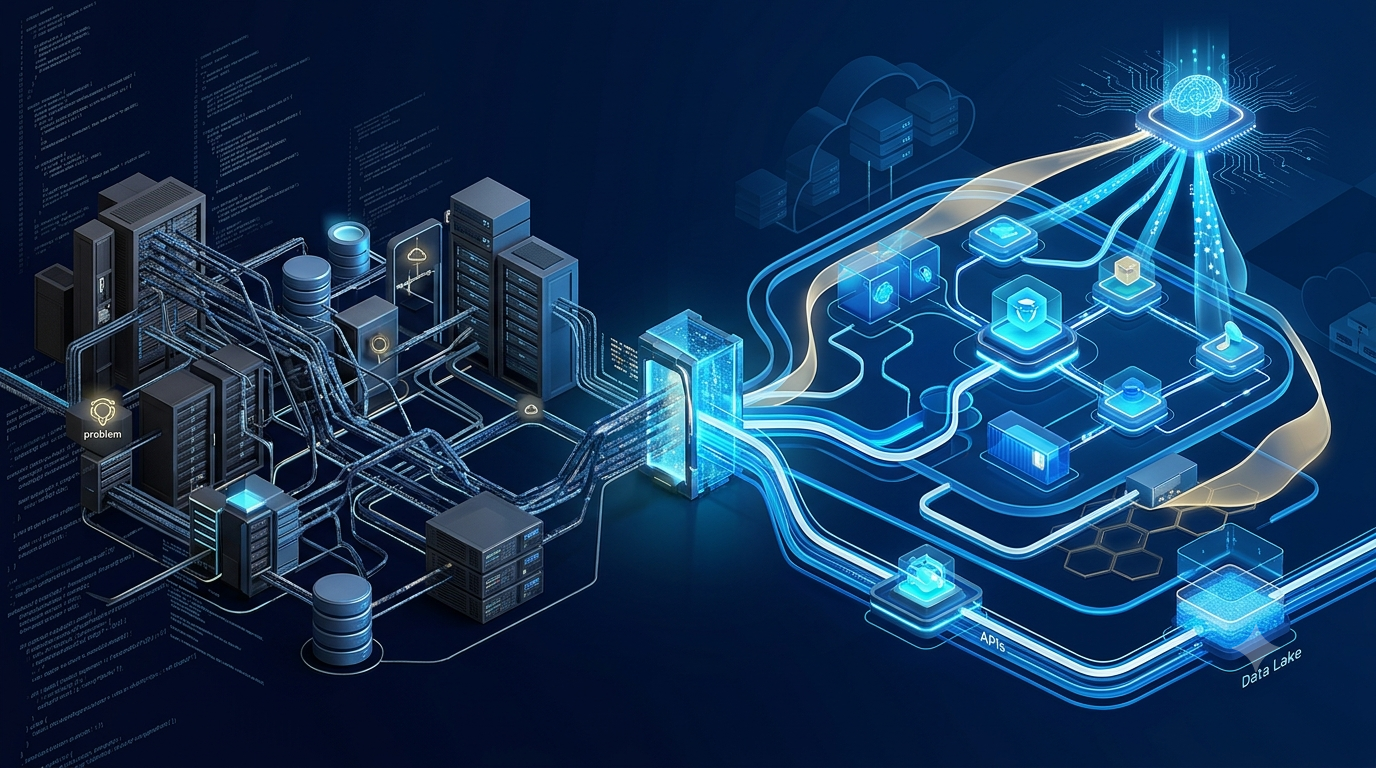
AI can support different stages of the modernization lifecycle.
Code analysis: Identifies dependencies and helps developers understand unfamiliar code.
Documentation: Generates initial technical documentation from existing code.
Code refactoring: Suggests code improvements and assists with framework or language migration.
Automated testing: Helps generate test cases and identify potential defects.
Migration planning: Supports dependency mapping and transformation planning.
A September 2026 AWS case study described an AI-assisted assessment for a financial institution that compressed a discovery and analysis phase from three to six months into four weeks. This was a specific engagement, not a guarantee of similar results for other projects.
Step-by-Step Modernization Process
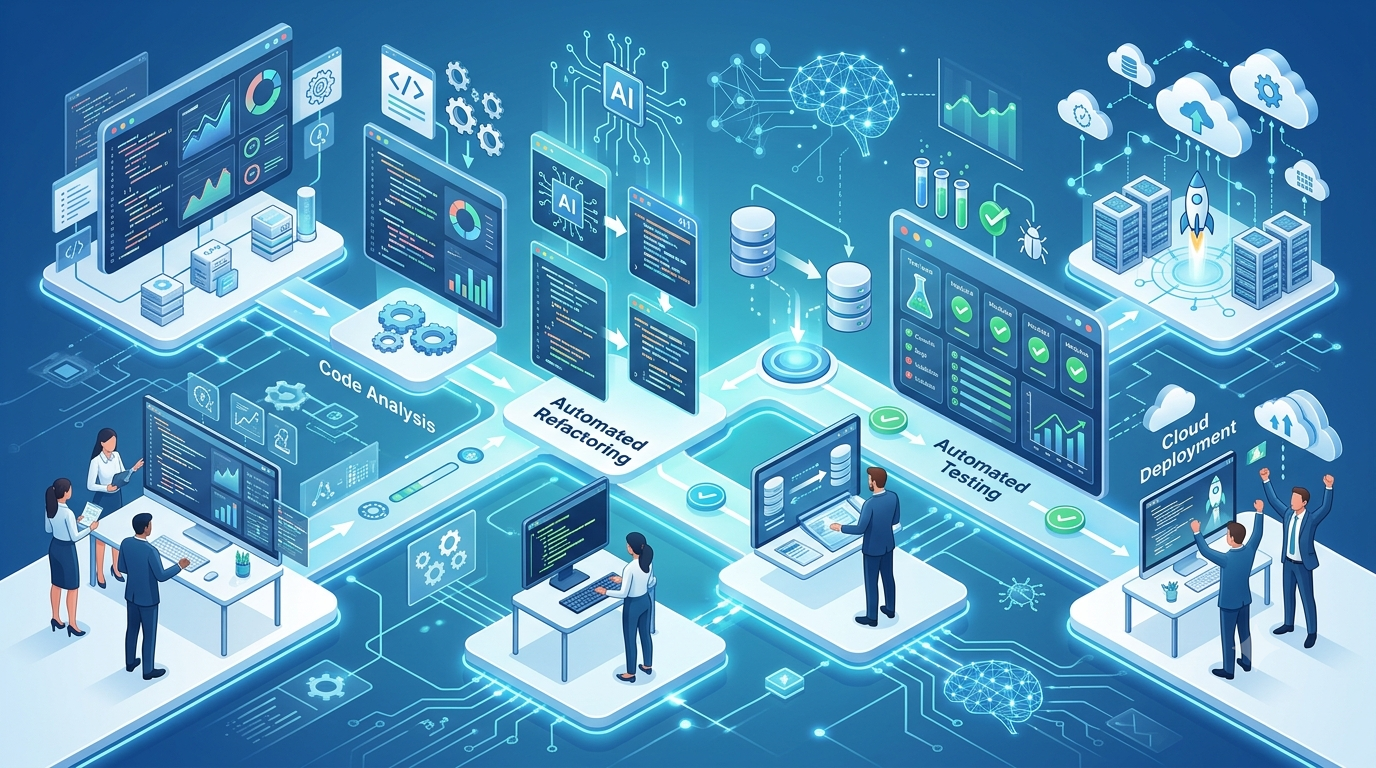
1. Assess the existing system
Review the codebase, architecture, dependencies, security risks, and business requirements.
2. Choose a modernization strategy
Decide whether to refactor, replatform, rearchitect, or rebuild the application.
3. Apply AI-assisted development
Use AI tools for code analysis, documentation, migration assistance, and test generation.
4. Modernize and migrate
Upgrade application components, databases, infrastructure, and integrations in controlled stages.
5. Test and validate
Perform regression, security, performance, and data integrity testing.
6. Deploy and monitor
Release the updated system, monitor its performance, and address issues through ongoing maintenance.
How to Reduce Modernization Costs
Businesses can manage modernization budgets by starting with a pilot project, prioritizing high-impact modules, reusing stable components, and migrating in phases.
Automated testing can help identify defects earlier, while a detailed assessment can reveal dependencies and risks before major development begins.
Microsoft recommends phased implementation and structured budgeting as part of application modernization planning.
Final Thoughts
The cost of modernizing legacy software with AI in 2026 depends on the system's complexity, the scope of transformation, and the technology choices involved. Smaller projects may require tens of thousands of dollars, while enterprise modernization can reach millions.
AI can accelerate selected engineering tasks, but successful modernization still requires careful planning, human validation, and reliable testing.
The most practical starting point is to assess the existing application, define measurable goals, and modernize in manageable stages.