Building a SaaS product in 2026 is easier than ever from a technology perspective, but creating a product people actually want to use is still the biggest challenge. Modern cloud platforms, AI development tools, APIs, and ready-made services can speed up development, but the process should always start with a real customer problem. Current SaaS development guidance commonly recommends validating the problem, defining a focused MVP, choosing the architecture, launching to a small audience, and improving from real user feedback.
1. Find a Problem Worth Solving
The first step in SaaS product development is identifying a specific problem. Instead of starting with technology, understand who your customers are, what problem they face, and how they currently solve it.
Talk to potential users, study competitors, check existing solutions, and find areas where customers are losing time, money, or productivity.
A simple question can help:
“Would someone actually pay for this solution?”
If the answer is unclear, validate the idea before spending months building it.
2. Define Your SaaS MVP
An MVP (Minimum Viable Product) is the smallest working version of your SaaS product that solves the main customer problem.
For example, if you are building an employee management SaaS, your first version might include:
User login
Employee profiles
Attendance
Basic reports
Admin controls
Subscription management
You do not need to build every feature on day one.
A focused MVP lets you launch sooner, collect feedback, and understand what customers actually need. Recent SaaS development guidance similarly recommends keeping the first version focused on one core workflow instead of creating a large feature list.
3. Choose the Right SaaS Tech Stack
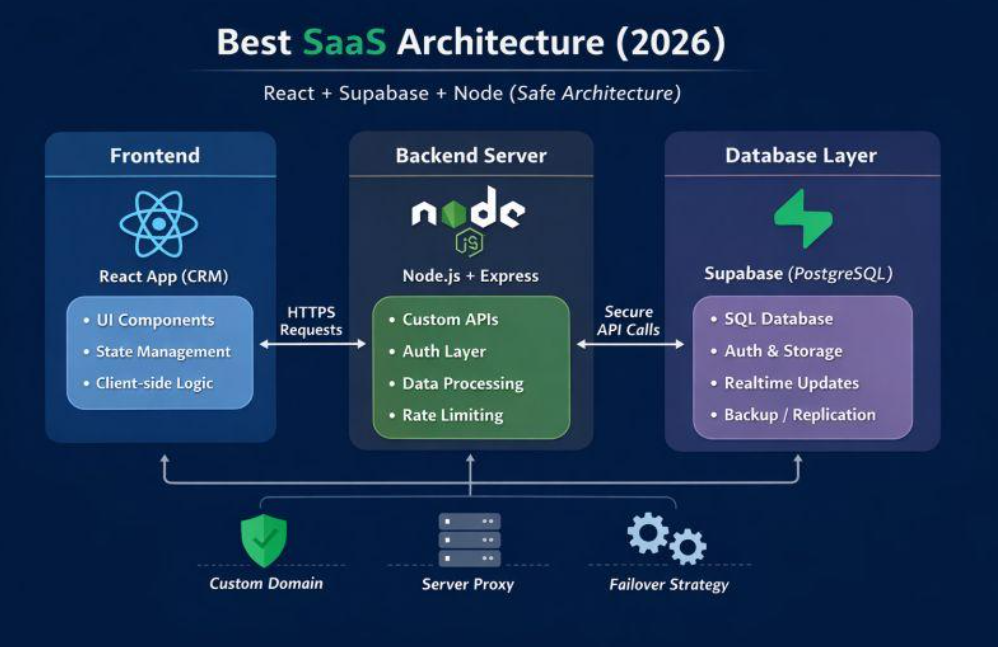
The SaaS tech stack depends on your product, team, budget, and expected scale.
A modern SaaS application can use technologies such as:
Frontend: React, Next.js
Backend: Node.js, Python, Java
Database: PostgreSQL, MySQL, MongoDB
Authentication: Auth0, Clerk, or custom authentication
Cloud: AWS, Azure, or Google Cloud
Payments: Stripe, Razorpay, or another payment provider
There is no single technology stack that works for every SaaS product. Choose technologies your team can develop, maintain, secure, and scale effectively.
4. Plan Your SaaS Architecture
Architecture becomes important when multiple customers use the same application.
Most SaaS products need authentication, APIs, databases, cloud infrastructure, file storage, background jobs, analytics, monitoring, and third-party integrations.
A major concept is multi-tenancy. Each business or customer using your SaaS can be treated as a tenant, and their data must remain properly isolated from other customers.
AWS describes tenant isolation as a fundamental part of multi-tenant SaaS architecture because customers must not be able to access another tenant's resources or data.
5. Build Authentication and Security
Security should be part of the product from the beginning.
Your SaaS may need secure login, password recovery, role-based permissions, API authorization, encryption, rate limiting, backups, monitoring, and audit logs.
For example, an organization might have different roles such as Owner, Admin, Manager, Employee, and Viewer.
Authentication confirms who the user is, while authorization determines what they are allowed to access. In a multi-tenant application, you also need proper tenant isolation so authenticated users cannot access another customer's data.
6. Add SaaS Pricing and Subscription Billing
A SaaS business usually generates revenue through subscriptions or usage-based pricing.
Common SaaS pricing models include:
Monthly subscriptions
Annual subscriptions
Per-user pricing
Usage-based pricing
Tiered plans
Freemium plans
Your billing system should support subscriptions, payments, invoices, upgrades, downgrades, cancellations, and failed payments.
Modern billing platforms support recurring, tiered, and hybrid subscription models, allowing SaaS companies to choose a pricing structure that fits their product.
7. Focus on User Experience
A SaaS product can have excellent technology and still fail if users find it difficult to use.
Keep the interface simple and focus on:
Easy onboarding
Clear navigation
Fast page loading
Responsive design
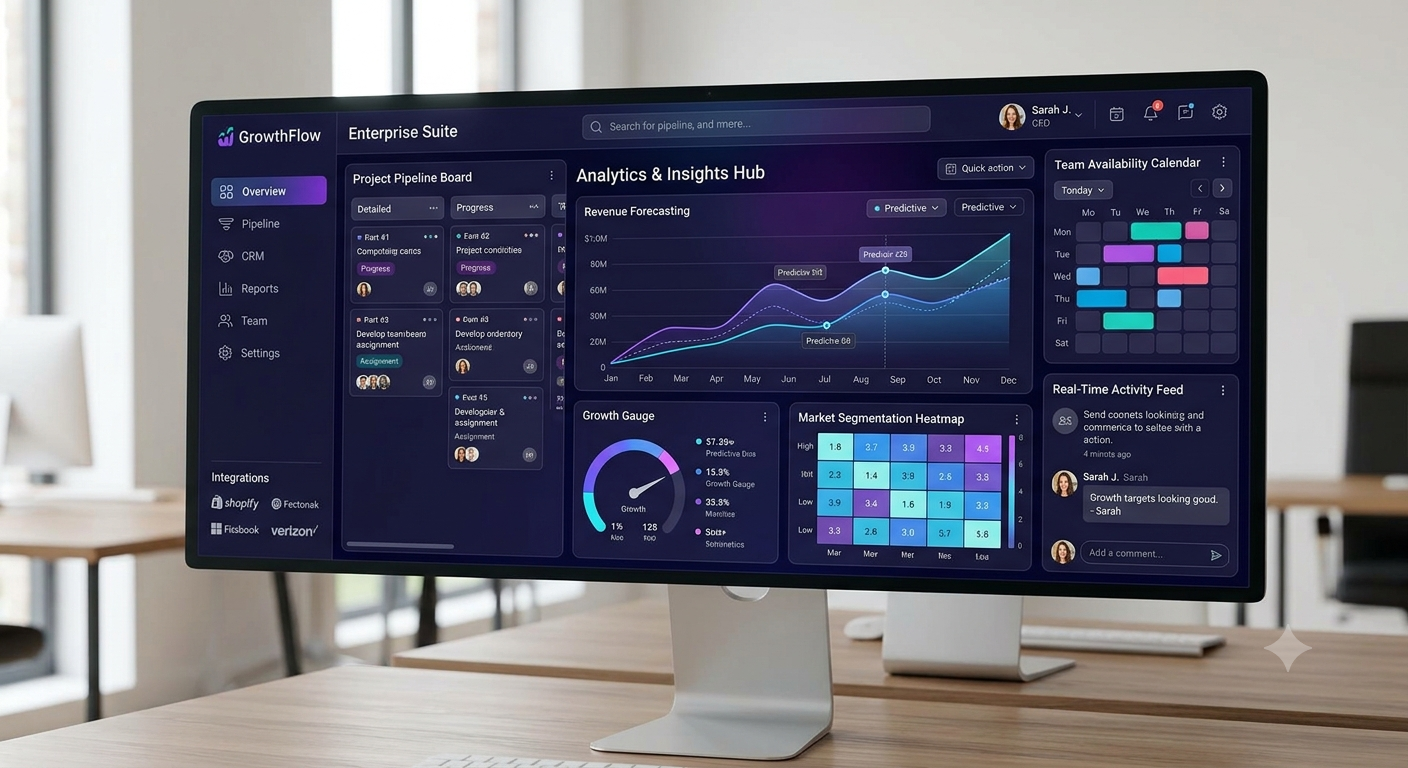
Useful dashboards
Clear buttons and actions
Helpful error messages
Simple workflows
Your goal is to help a new customer understand the product and reach their first useful result as quickly as possible.
8. Test and Launch Your SaaS Product
Before launching publicly, test the complete customer journey.
Check registration, login, permissions, payments, subscription changes, database operations, mobile responsiveness, API security, performance, and error handling.
Then launch with a small group of real users instead of trying to attract thousands immediately.
Measure important SaaS metrics such as activation, conversion, recurring revenue, retention, and churn. Use what you learn to improve the product.
9. Improve and Scale
Launching is only the beginning of SaaS development.
After launch, use customer feedback and product analytics to decide what to improve next. You may later add integrations, automation, AI features, advanced analytics, mobile applications, or enterprise functionality.
As usage increases, you can optimize databases, introduce caching, improve monitoring, scale infrastructure, and strengthen security.
The key is to scale when the product needs it, rather than making the initial architecture unnecessarily complicated.
Final Thoughts
Learning how to build a SaaS product in 2026 is not simply about writing code. It is about solving a real problem, building a focused MVP, creating a reliable architecture, delivering a great user experience, and continuously learning from customers.
Start small, launch early, measure real usage, and improve based on evidence. That approach can help turn a SaaS idea into a sustainable software product.